Zoho CRM is a powerful yet budget-friendly customer relationship management platform that delivers enterprise-grade features without premium pricing.
With deep customization, AI-driven insights, and seamless ecosystem integration, it stands out among the top CRM software 2025 and remains a top choice for growing businesses.
What Is Zoho CRM?
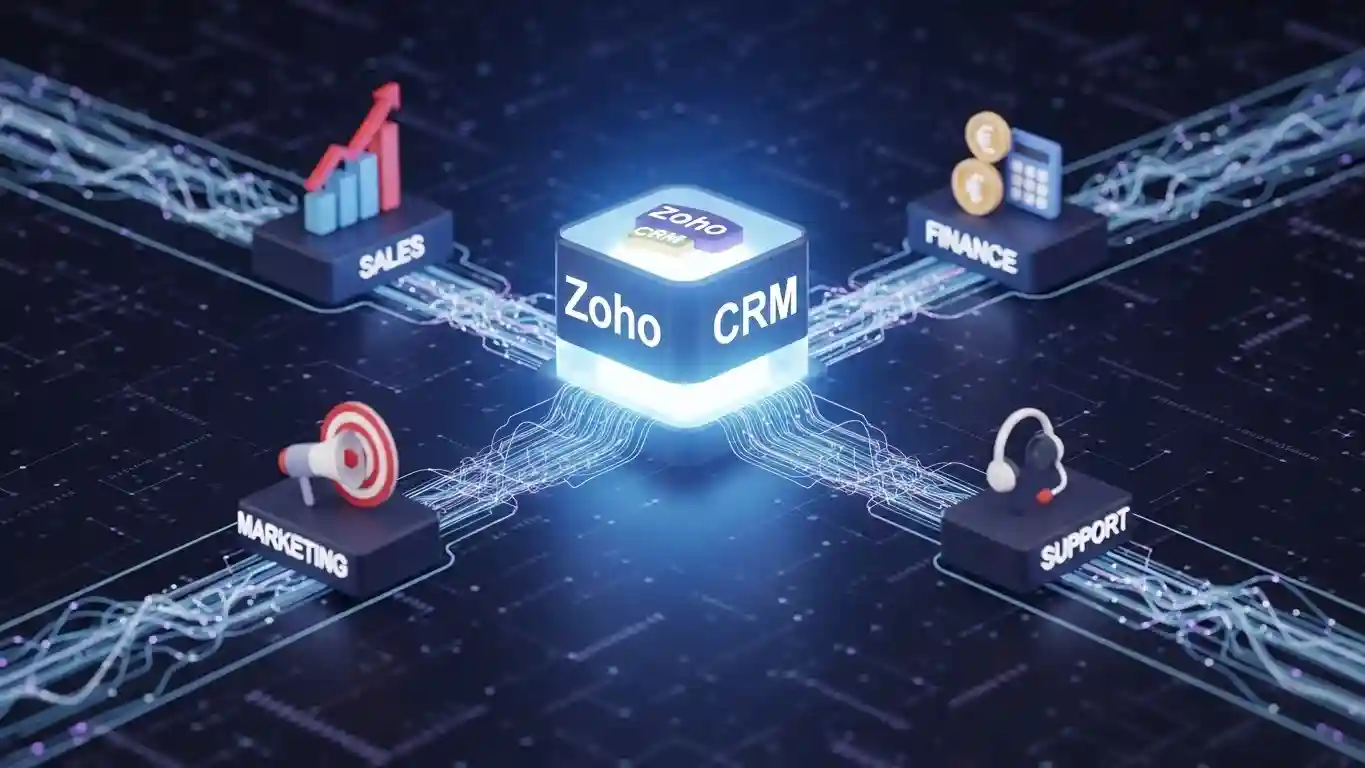
Zoho CRM is a cloud-based customer relationship management solution designed to help businesses manage leads, contacts, deals, and customer interactions from a single unified platform. It acts as the central hub of the Zoho ecosystem, connecting sales, marketing, customer support, finance, and operations into one integrated business environment.
Unlike many CRMs that focus only on sales, Zoho CRM provides a holistic approach to customer management. It integrates effortlessly with more than 50 Zoho applications, including Zoho Books, Zoho Campaigns, Zoho Desk, and Zoho Inventory, enabling businesses to eliminate data silos and gain a complete view of the customer lifecycle.
Its modular structure allows companies to start small and gradually expand functionality as their needs grow, making Zoho CRM equally suitable for startups, small businesses, and large enterprises.
Why Zoho CRM Is a Top CRM Software in 2025
Zoho CRM’s biggest advantage in 2025 is its unmatched value-for-money proposition. While many enterprise CRMs charge high fees for advanced automation, analytics, and AI features, Zoho CRM delivers these capabilities at a fraction of the cost.
With plans starting at just $14 per user per month and a genuinely useful free plan for up to three users, Zoho CRM removes financial barriers that often prevent small businesses from adopting professional CRM systems. This affordability, combined with scalability, makes it one of the best CRM platforms for businesses planning long-term growth.
Key Features of Zoho CRM
Lead and Contact Management
Zoho CRM captures leads from websites, emails, social media, and other channels, automatically organizing them into detailed contact profiles. These profiles include communication history, company data, and social insights, enabling highly personalized engagement.
Sales Pipeline Management
The platform offers visual pipelines with customizable stages that reflect real-world sales processes. Deals can be tracked easily, while forecasting tools help managers predict revenue and identify risks early.
Workflow Automation
Zoho CRM automates repetitive tasks such as lead assignment, follow-ups, task creation, and field updates. These workflows reduce manual work and ensure consistent sales execution across teams.
Zia AI Assistant
Zia is Zoho CRM’s built-in AI assistant that provides predictive analytics, deal forecasting, anomaly detection, and smart recommendations. It can even answer natural language questions about sales data, making insights accessible to non-technical users.
Customization with Canvas Builder
Canvas Builder allows businesses to design custom layouts, modules, and fields without coding. This flexibility ensures Zoho CRM adapts to unique business processes instead of forcing teams to change how they work.
Multi-Channel Communication
Sales teams can communicate with customers via email, phone, live chat, and social media from one interface. All conversations are logged automatically, preserving context for every interaction.
Blueprint Process Management
Blueprint enforces structured sales processes by defining required steps, approvals, and validations. This ensures consistency while maintaining flexibility for different deal types.
Advanced Analytics and Reporting
Zoho CRM provides customizable dashboards, real-time metrics, and in-depth reports that help businesses analyze performance, customer behavior, and growth trends.
Use Cases of Zoho CRM
Small businesses use Zoho CRM to establish professional sales operations without high costs. As they grow, they expand into marketing automation, customer support, and finance using other Zoho apps.
Manufacturing companies rely on Zoho CRM to manage complex B2B sales cycles, quotations, and approvals. Integration with Zoho Books and Inventory creates smooth order-to-cash workflows.
Service-based businesses and consultants use Zoho CRM to track client relationships from proposal to project completion, linking sales directly with billing and resource management.
Real estate agencies customize Zoho CRM to manage listings, buyer preferences, and automated follow-ups, streamlining property sales processes.
E-commerce businesses integrate Zoho CRM to track customer behavior, manage inventory, and deliver personalized support across multiple channels.
Non-profit organizations use Zoho CRM for donor management, fundraising campaigns, volunteer coordination, and impact tracking, benefiting from its affordability and flexibility.
Pros and Cons of Zoho CRM
Advantages
Zoho CRM offers exceptional value, delivering enterprise-level features at low cost. Its deep customization, strong automation, AI-powered insights, and extensive Zoho ecosystem integration make it highly versatile. Scalability without steep price increases allows businesses to grow sustainably.
Disadvantages
The platform’s vast feature set can feel overwhelming to new users. Initial setup and configuration require time and training to unlock full value. Customer support response times may be slower than premium competitors, and the interface, while functional, lacks the polish of higher-priced CRMs.
Final Verdict: Is Zoho CRM Worth It in 2025?
Zoho CRM is one of the best choices in 2025 for businesses that want powerful CRM capabilities without premium pricing. It is especially well-suited for small and mid-sized businesses that expect growth and need a scalable solution that won’t strain their budget.
While it may require an initial learning investment, the long-term benefits far outweigh the challenges. For organizations that prioritize functionality, flexibility, and return on investment over visual polish, Zoho CRM remains the most comprehensive and affordable CRM platform available.
Its greatest strength lies in democratizing enterprise-grade CRM features, allowing businesses of all sizes to build strong customer relationships, automate sales processes, and grow confidently without overspending on software.